The Myth That a Quiet Audience Hears More
Quiet audiences are not always the most attentive. Learn how concert traditions shape listening, and how to read audience behaviour without mistaking silence for engagement.
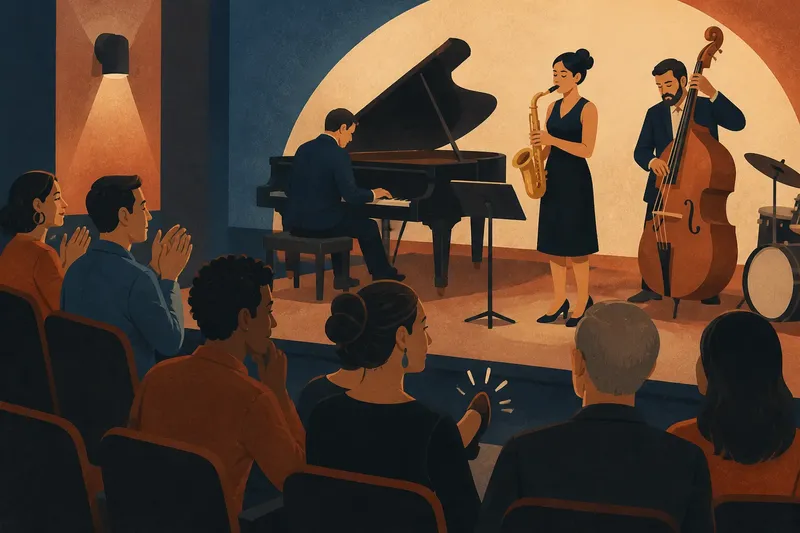
At a jazz set, one listener may nod to the pulse while another calls approval between solos; at a chamber concert, the same sounds could interrupt a delicate passage. Neither response, by itself, shows who is listening closely. The idea that a quiet audience hears more confuses one concert tradition’s etiquette with attention itself.
Silence can help listeners follow music, particularly when a sound is soft or the room carries noise easily. But attention also appears in stillness, movement, laughter, responses between pieces and the shared timing of a room. These distinctions make it easier to understand what an audience is doing without treating every concert as if it had the same rules.
Silence is a convention, not a measure of attention
A convention is an agreed pattern of behaviour that helps a group share an event. In many recital halls, listeners hold applause until a work ends, avoid talking during the music and keep movement to a minimum. That pattern gives performers a predictable acoustic space, but it does not reveal what is happening in each listener’s mind.
Someone sitting motionless may be absorbed, distracted or simply comfortable with the expected etiquette. Another listener may quietly mark a beat with a foot while following every change in the music. Audience conduct is visible; attention is not directly observable, so one should not be used as a simple substitute for the other.
A concert setting changes the meaning of a sound
The same response can be appropriate in one setting and disruptive in another. A cheer after a rock song’s final chord belongs to a different social exchange from applause between movements in a string quartet. What matters is not whether a sound is audible, but how it relates to the music, the room and the people sharing it.
Venue design also affects what the audience can hear. A close, acoustically reflective chamber room may carry a cough or a rustling coat across the seats, while an amplified outdoor stage can absorb a larger wash of crowd noise. Neither space makes one audience more attentive by nature; each changes what listeners and performers can hear from one another.
Different traditions invite different forms of response
Concert etiquette is learned through participation. A listener familiar with a formal recital may wait quietly for a clear ending; someone accustomed to a participatory performance may answer a singer, clap along or call out encouragement. Those habits can each express recognition and involvement when they fit the event’s practice.
Traditions are not fixed rules shared by everyone in a genre. A folk performance might invite a chorus in one setting and favour attentive stillness in another. The best guide is the event’s own cues: the performer’s invitation, the audience’s established pattern and the way the music makes space for a response.
Movement can be part of listening
Physical movement is not automatically a sign of distraction. A listener may sway, tap a hand or shift posture in response to rhythm while still following changes in texture and phrasing. In some performances, such movement is part of how the audience acknowledges the music’s pulse.
There is a difference between movement that joins the shared experience and movement that repeatedly blocks another person’s view or makes avoidable noise. That distinction is practical rather than moral: audience members are listening together, and each person’s actions can affect the conditions available to those nearby.
Shared responses help shape a performance
Applause, laughter and a collective hush are not merely sounds added after the music. Performers can sense the room’s response and may adjust pacing, timing or the space between pieces. In an informal setting, a brief cheer can encourage an exchange; in a quiet recital, a held pause can give a final note room to settle.
Imagine a singer finishing a song in a small folk club, then pausing with an open hand towards the audience. A listener who starts a chorus may be following the performer’s invitation, and others may join; if the singer instead turns to the next song without inviting a response, waiting preserves the shape of the moment. The observable cue is the performer’s action, not a universal rule that every quiet or vocal response means the same thing.
Quiet serves different purposes at different moments
Silence can be an active part of a concert. It may allow a sustained sound to fade, make a delicate entrance audible or give the audience time to register an ending. In those moments, holding back from applause or conversation is a way of attending to the music’s timing.
But a quiet pause does not always demand the same response. A performer may leave space for reflection, wait for a cue or simply prepare the next piece. Watching the stage and listening for the event’s pattern can help distinguish these moments without assuming that every pause is a test of etiquette.
Attentive listening includes awareness of other listeners
Attention is not only directed towards the stage. In a shared room, listeners also notice how their choices affect the people around them. A soft response that suits the performance may become intrusive if repeated through a quiet passage; an effort to remain perfectly still may become uncomfortable if the event clearly welcomes movement.
A useful approach is to follow the strongest local cues rather than impose a rule from another setting. Notice whether the performer invites participation, whether applause tends to come between sections or only at the end, and whether the audience is responding collectively. If uncertain, waiting briefly lets the room’s established pattern become clearer.
How can you read attentive concert behaviour?
Does a quiet audience always listen more closely?
No. Silence can protect subtle sounds from interruption, but it cannot show what each person is attending to. A responsive audience can be deeply engaged when its behaviour fits the music and the setting.
When is it appropriate to applaud between movements?
Practices vary by performance and tradition, so watch how the event is unfolding rather than relying on one rule for every concert. If the ending is unclear, a short pause gives you time to hear whether the performer or audience signals that the larger work is continuing.
Is moving to the music disrespectful?
Not by itself. Movement may be welcome in a dance, club or participatory setting, while large or noisy movements can distract people in a more restrained room. Consider the event’s cues and the view and listening space of those around you.
How can you tell whether an audience response is welcome?
Look for an invitation from the performer, a repeated pattern among audience members or a clear opening in the music. When those cues are absent, listening first is a considerate way to learn the room’s expectations.
Read the room before judging its quiet
The myth that a quiet audience hears more persists because silence is easy to see and attention is private. Yet concert traditions give listening more than one outward form: a held pause, a shared beat, a chorus or applause at the right moment can all belong to an attentive room.
For concertgoers, the useful question is not whether the audience is silent, but whether its behaviour fits the performance and leaves others room to listen. That distinction makes quiet audience behaviour easier to understand, and it lets each tradition be heard on its own terms.