A Phrase Changes Shape at the End
A musical phrase ending can feel settled, open or suspended; learn to hear how its final notes reshape the music that came before.
Why can the same last note sound like an answer in one passage and a question in another? A musical phrase ending takes its character from the notes leading into it, as well as from the note itself. Listen for that relationship and a phrase can seem settled, open or suspended without needing to know its technical name.
A phrase is a musical gesture with a destination
A phrase is a stretch of music that feels like a connected gesture, rather like a spoken sentence or a breath-shaped line. A singer may gather momentum, reach a high note and release it; an instrumental melody can make the same kind of arc. The phrase does not have to stop at a silence. Its sense of arrival may come from rhythm, pitch, harmony, or a combination of them.
To hear the ending, begin a little before it. Notice whether the line has been climbing or falling, repeating a note, or moving in small steps. Then attend to its final notes: do they seem to complete that motion, interrupt it, or leave it poised for more?
A settled ending makes earlier motion feel complete
A settled ending gives the ear a sense that the musical thought has reached a resting place. The final note may feel stable in the harmony, while the rhythm allows it room to land. A small pause, a longer note or a clear release can strengthen the impression, though none is required.
What matters is the fit between the arrival and the path towards it. A melody that has been leaning towards a particular pitch may sound resolved when it reaches a note that rests comfortably with the accompaniment. In another context, that very pitch could feel less final because the harmony or rhythm points onwards.
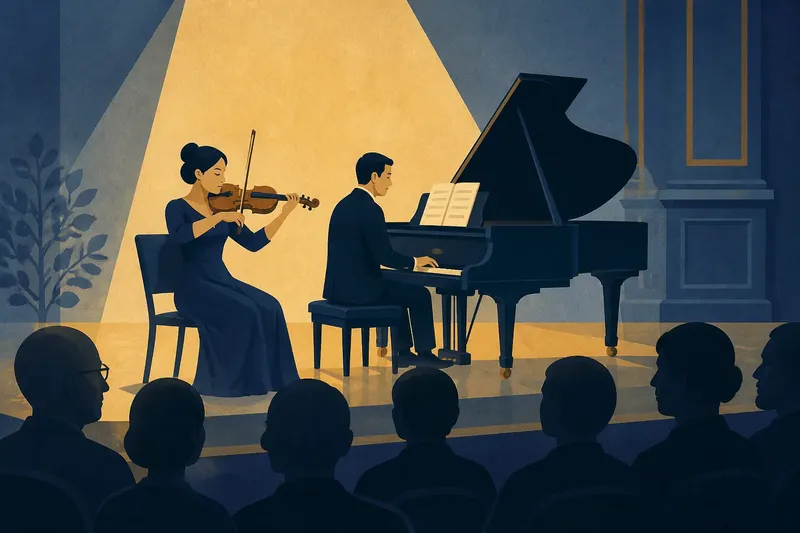
Imagine an invented situation: a violin line rises in measured steps while the piano supports it, then both arrive together on a held, stable chord. The audible result might feel like a completed thought, because the upward movement, shared arrival and lingering sound all point towards rest. If the violin instead moves on before the piano settles, the same chord may seem less conclusive.
An open ending leaves a route forward
An open ending does not necessarily sound unfinished by accident. It can be a deliberate invitation to hear what follows. A phrase may finish on a note that seems to lean towards another pitch, or the accompaniment may keep a harmonic tension alive beneath it.
Rhythm can make an ending open, too. A note arriving on a weak part of the beat, or a phrase cut off before its expected emphasis, may feel as though it has not reached its full weight. The listener senses direction rather than repose: the music has stopped speaking for a moment, but its thought continues.
At a concert, compare the final note with the next phrase rather than judging it in isolation. If the following music takes up the same melodic shape or completes a harmonic movement, the earlier ending may retrospectively sound like a doorway. A composer or performer can make that connection obvious, or keep it subtle enough that the ear notices only a lingering expectation.
A suspended ending holds tension without resolving it
A suspended ending is more specific than a generally open one: it holds a musical tension in place. Often, one part of the texture seems ready to move while another sustains a note or chord. The result can feel like a breath held at the edge of release.
Suspension depends on what the ear expects. A dissonance—a combination of notes that sounds tense in its musical setting—may create pressure for a later change. If the change arrives, the phrase can settle; if the music pauses or moves elsewhere first, the tension remains audible.
Silence after a suspended phrase does not erase its direction. The pause may make the expectation more vivid, especially when the sound seems to stop before the musical motion has been answered. Listen for whether the next entrance releases that pressure, intensifies it, or shifts attention to a new idea.
Listen for the relationship, not a fixed label
Terms such as cadence describe familiar ways music can arrive or pause, but a listener does not need to identify a cadence to hear its effect. A cadence is a harmonic pattern that helps shape closure or continuation. Its impression depends on how it is prepared, voiced and placed in the larger passage.
Try following one musical part through its last few notes, then listen again to the whole texture. A melody may sound complete while a bass note keeps moving underneath; a chord may suggest closure while the rhythm presses ahead. The parts can pull in different directions, making an ending feel ambiguous rather than simply settled or open.
Performance also affects the shape. A singer might taper the sound, while a pianist gives the final chord a firm attack; a conductor may hold a pause long enough for the audience to hear the tension. These choices alter the emphasis and timing, but they work with the phrase’s underlying musical relationships rather than replacing them.
What should you listen for at a phrase ending?
Does the final note sound stable?
Listen to whether the note rests comfortably against the accompanying harmony or seems to lean towards a change. Its stability is relative to the music around it, not an isolated quality belonging to the pitch alone.
Does the rhythm allow the phrase to land?
A longer note or a clear rhythmic emphasis can make an arrival feel weighty. A quick cutoff or an unexpectedly light landing may keep the phrase in motion.
What does the accompaniment do?
Notice whether the bass and chords arrive with the melody, continue underneath it, or change after it stops. Those details can confirm the melody’s sense of closure or quietly resist it.
How does the next phrase change your impression?
Hear whether the following music answers, completes or redirects the earlier gesture. The continuation may reveal that an apparent ending was only a pause in a longer musical sentence.
Let the next sound revise the ending
A phrase ending is not always a verdict delivered on its final note. It is a moment whose meaning grows from the approach, the arrival and what follows. In live music, allowing the next sound to revise your first impression is a simple way to hear more of how a musical phrase ending takes shape.