A First Concert in an Unfamiliar Hall
A first concert in an unfamiliar hall can feel easier with a gentle plan for arrival, finding your bearings and choosing one sound to follow.
A first concert in an unfamiliar hall can leave you wondering where to look, when to settle and how much you are meant to understand. You do not need to learn the room in advance or follow every sound at once: a small routine can help you arrive calmly and choose one detail to listen for.
This plan begins before you leave home and ends as you step back outside. It is not a rulebook for concert-going. Treat it as a way to give your attention a few useful resting places, while leaving the performance free to surprise you.
Before you go, make arrival feel manageable
Check the venue’s booking information for the address, entrance, door-opening time, accessibility details and any notes about late seating. A concert hall may share a building with a café, rehearsal rooms or other public spaces, so the venue name alone may not tell you which door to use.
Choose one practical question to settle before travelling, such as whether you need to collect a ticket or where to ask about step-free access. If the venue’s information does not answer it, contact the box office. Clearing up a single uncertainty can be more helpful than trying to memorise the whole building.
Think about how you want to travel there and what you will need to carry. A paper ticket, a charged phone with the booking email accessible, and a coat you can manage easily are ordinary options; the venue’s own instructions should guide any special arrangements.
On arrival, let the room introduce itself
Once inside, pause somewhere that does not block a doorway or the flow of people. Notice the broad layout: where the stage is, where the audience enters, and whether the seating is on one level or divided into sections. You are not trying to memorise an architectural plan; you are giving yourself a few landmarks.
Look for signs to your seating area, toilets, cloakroom and exits. If a sign is unclear, ask a steward rather than wandering through doors marked for staff or performers. Finding the route back to the foyer can be reassuring, especially if you prefer to know where you can take a short break.
Different rooms make their layout felt in different ways. A long, steep auditorium may draw your gaze towards the stage, while a smaller room with seats around the performers can make entrances and changes of position easier to notice. Let the shape of the space guide your attention without deciding in advance what the concert ought to feel like.
Find your seat without judging the whole room
Follow the row and seat information on your ticket, and ask an usher if the numbering is hard to read. Once seated, take a moment to check what is visible from your position: the performers, the conductor if there is one, and any areas where musicians may enter or leave.
A seat gives you a particular view, not a complete account of the performance. A pillar, balcony edge or nearby audience member may obscure part of the stage; that does not mean you have chosen badly. If you are concerned that you cannot see or access what you need, speak to a member of staff before the concert begins.
Notice the small practical features too. You might see a printed seating map, a place to keep a coat, or a quiet route back to the foyer. These details are useful because they help you settle; they are not a test of whether you belong in the room.
During the week, keep the preparation light
In the days before the concert, give yourself a short window to check the essentials rather than repeatedly searching for a perfect explanation of the hall. Read the venue’s access and arrival information, make a note of the route, and decide whether you want to arrive early enough to look around before finding your seat.
If you are curious about the building, the venue’s website may offer a seating plan or photographs. Use them to recognise likely landmarks, not to predict exactly what you will hear. A seating diagram can show how sections relate to the stage, but it cannot tell you what will hold your attention on the night.
You can also choose one modest listening detail in advance. For instance, decide to notice when a melody passes from one instrument group to another, or how the room seems to carry a soft sound. Keep the choice flexible: if the music draws you elsewhere, follow it.
At the concert, choose one detail to follow
When the performance begins, settle on one audible or visible thread. You might follow a repeated rhythm, listen for a particular instrument, or watch how the performers signal a change together. A single thread gives your attention a starting point without asking you to decode every part of the music.
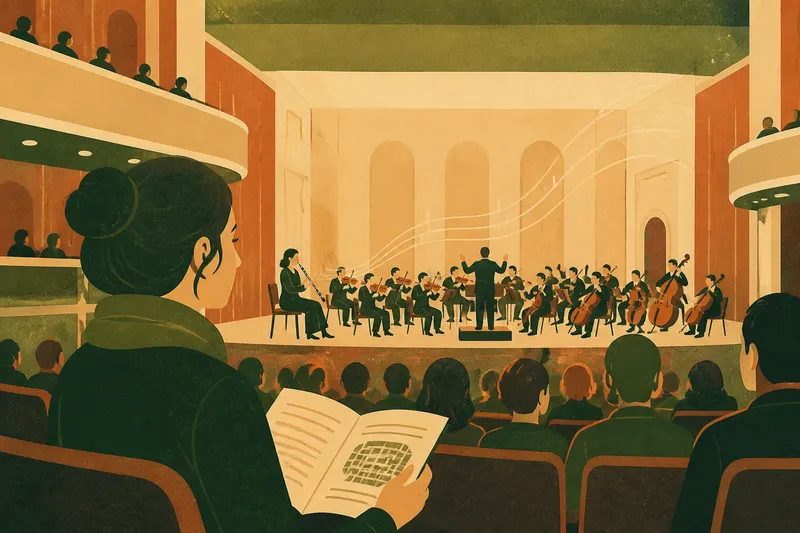
Imagine you arrive at a hall with a balcony and a stage that is wider than the room you usually visit. You find your seat, notice that a clarinet is placed near the front, and decide to listen for its sound returning after the ensemble grows louder. The expected result is not a musical discovery on command; it is simply that you have one clear thing to recognise if it appears, while remaining free to notice something else.
It is also fine if your chosen detail disappears from attention. You may become absorbed in the overall sound, lose the thread during a quiet passage or find yourself watching a performer’s movement instead. Letting your focus shift is part of listening, not evidence that you have missed the right way to attend.
As the performance ends, use the room as a guide
At the end, follow the audience’s movement without rushing to stand if people around you remain seated. If you need to leave promptly, check the route you noticed earlier and follow staff directions. If you would rather linger, wait until the main flow has eased before moving along a narrow aisle.
On the way out, you may notice the hall differently from how you did on arrival. The stage might seem more distant once the audience has stood, or a doorway may reveal a view you missed before. There is no need to turn these observations into a judgement about whether the room is good or bad; they are simply part of the evening you experienced.
What should you notice in a new concert hall?
Should I inspect the whole room before the concert?
No. A few landmarks are enough: the stage, your seating section and the route back to the foyer. You can explore more if you want, but you do not need to turn arrival into a tour.
What if I cannot see every performer?
Listen to the balance and movement of the music as well as watching the stage. If an obstruction prevents you from seeing what you need, ask an usher whether any options are available.
Do I need to know the music beforehand?
No. A little background reading can be enjoyable, but the concert can also begin with simple curiosity. Choose one sound, gesture or change to notice, and let the rest remain open.
What if I feel unsettled after I sit down?
Take a quiet moment to locate the aisle or foyer route and let your eyes rest on one stable point. If you need help, a steward can direct you to a suitable place without making a fuss.
Let the next visit begin with one remembered detail
After the concert, keep one brief note if you would like to remember the room: perhaps the way the stage sat within the seating, a sound that carried clearly, or the route that made arrival feel straightforward. You do not need to rate the hall or write a full review.
That small memory can make another first concert in an unfamiliar hall feel less unknown, while leaving room for each venue to be its own place. The useful aim is not to master the room, but to arrive knowing where you are, find a comfortable point of attention and leave with one detail worth carrying home.